Category: Tech
Duration: 5 months
Tools: Figma, photoshop, Fusion 360, Blender, Keyshot
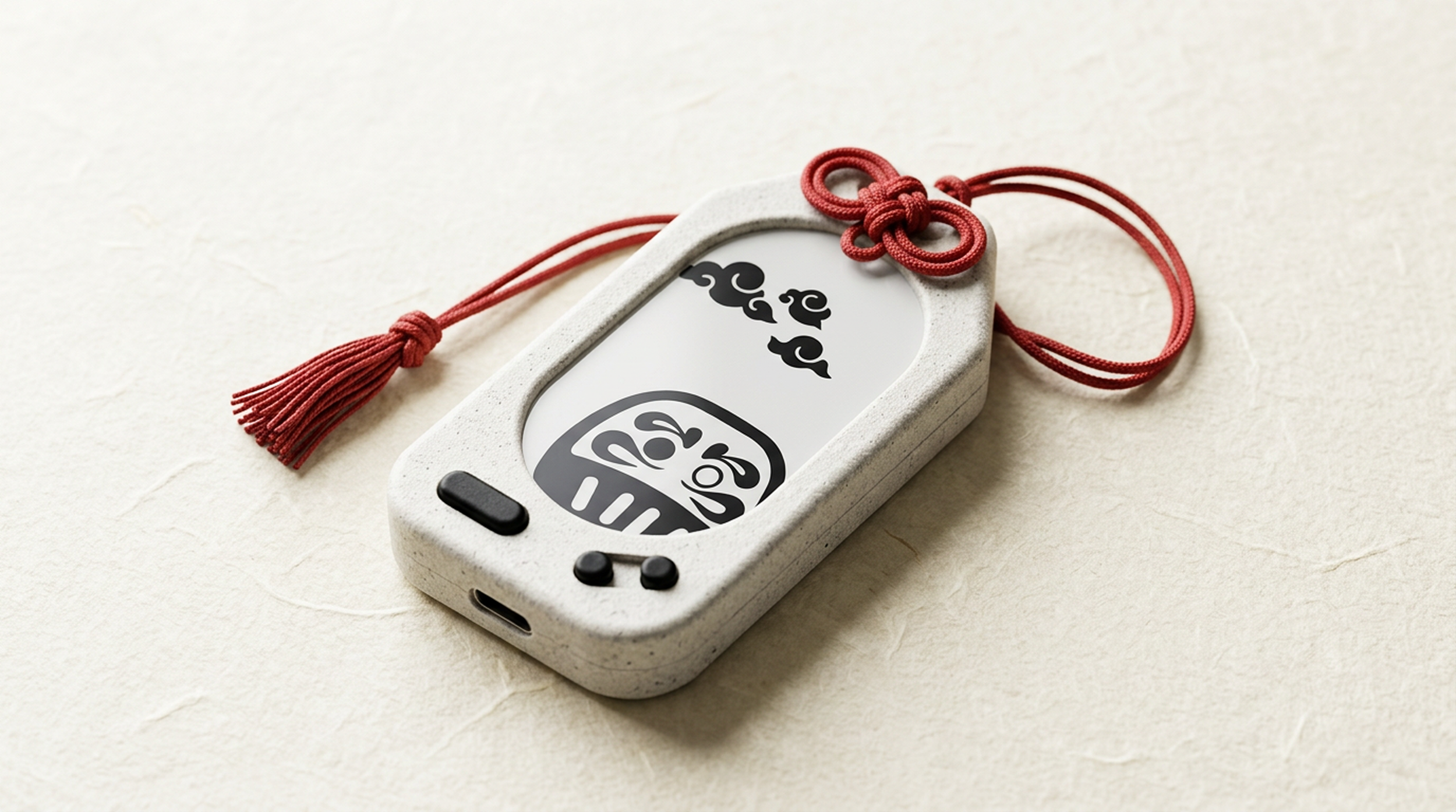
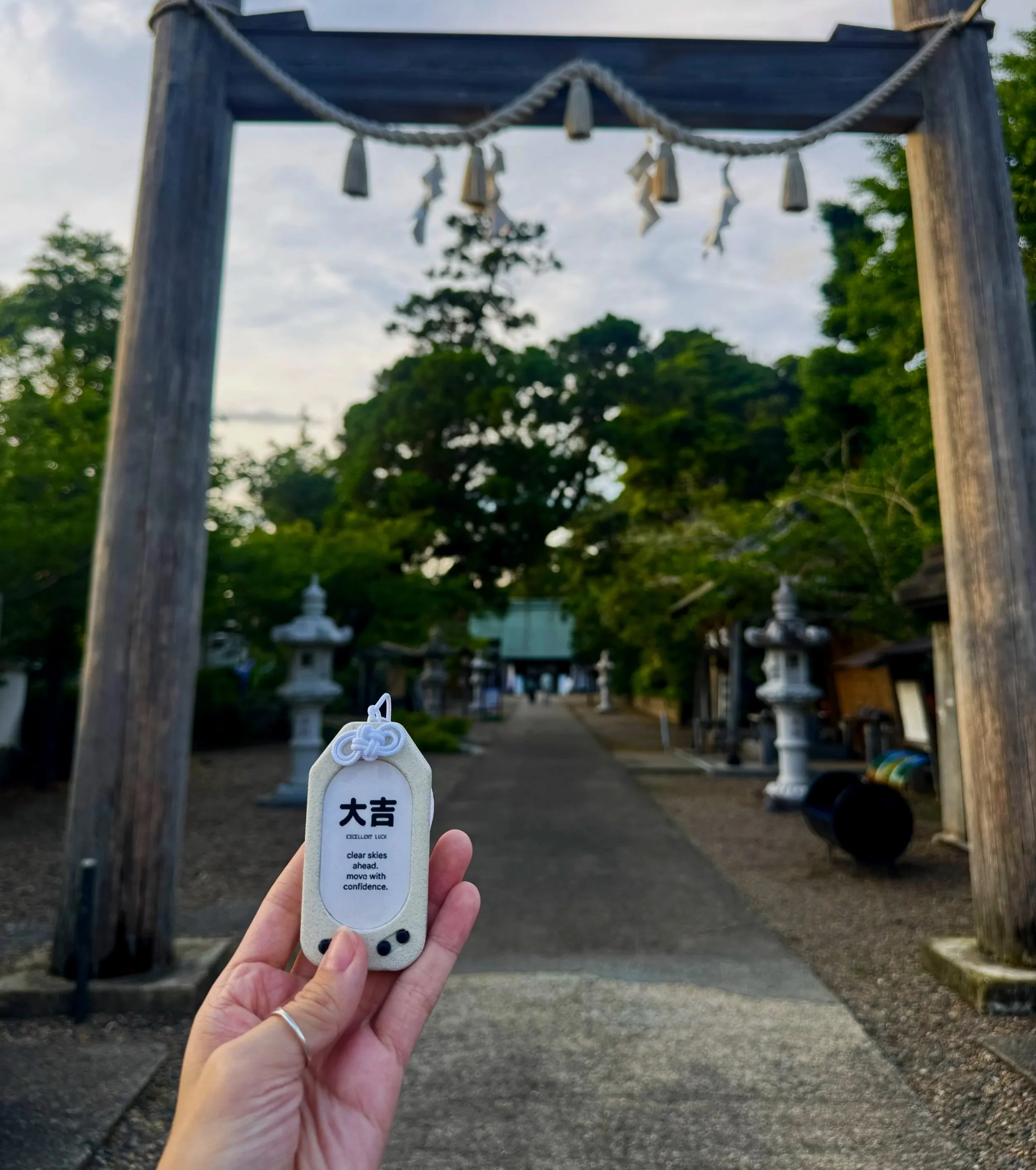
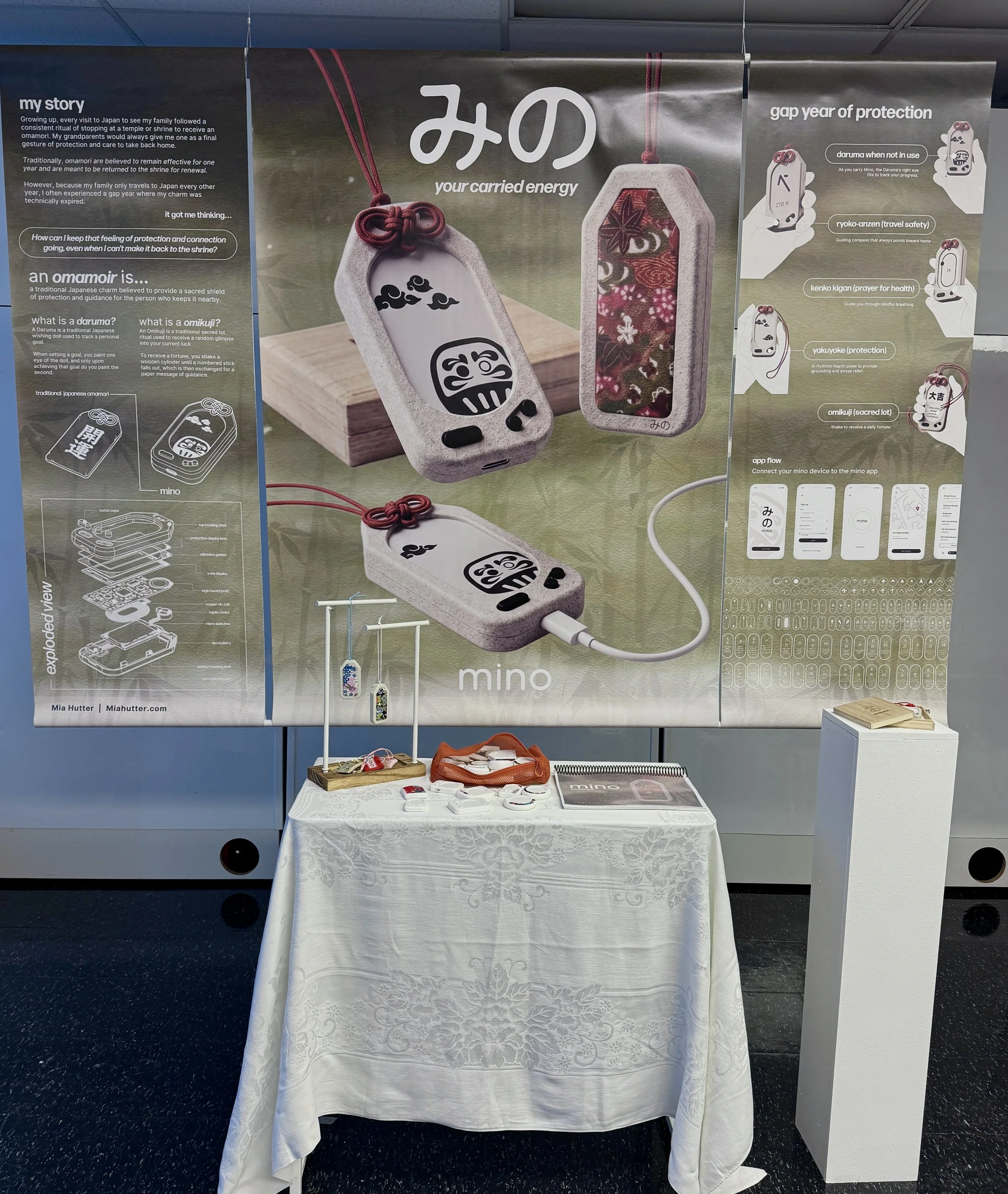
Mino is a digital talisman inspired by the tradition of Omamori, designed to provide a sense of safety and home for those living far from their roots.
my story
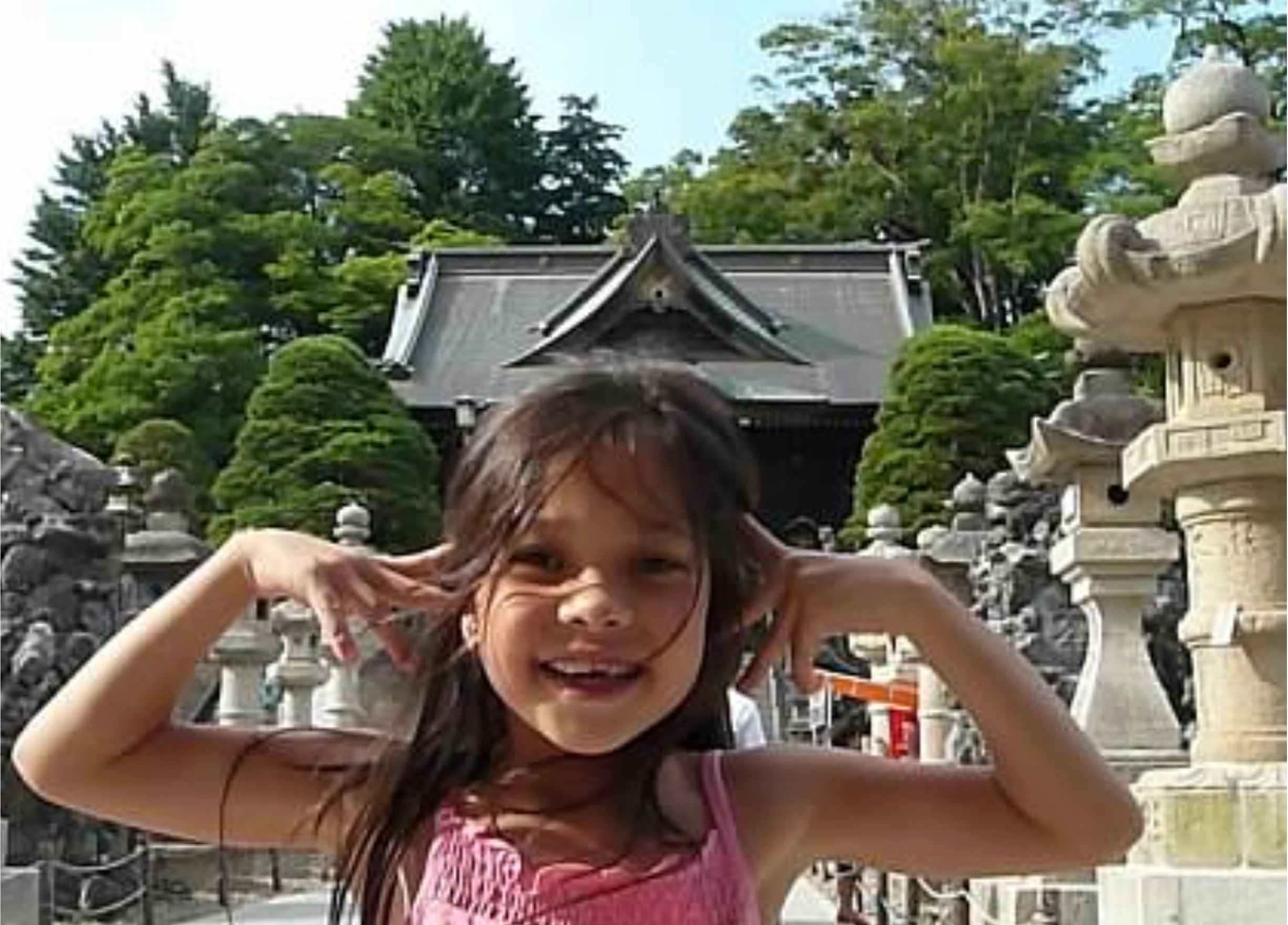
Growing up, every visit to Japan to see my family followed a ritual of stopping at a temple or shrine to receive an omamori (Japanese charm). My grandparents would always give me one as a final gesture of protection and care to take back home.
Traditionally, omamori are believed to remain effective for one year and are meant to be returned to the shrine for renewal.
However, because my family only travels to Japan every other year, I often experienced a gap year where my charm was technically expired...
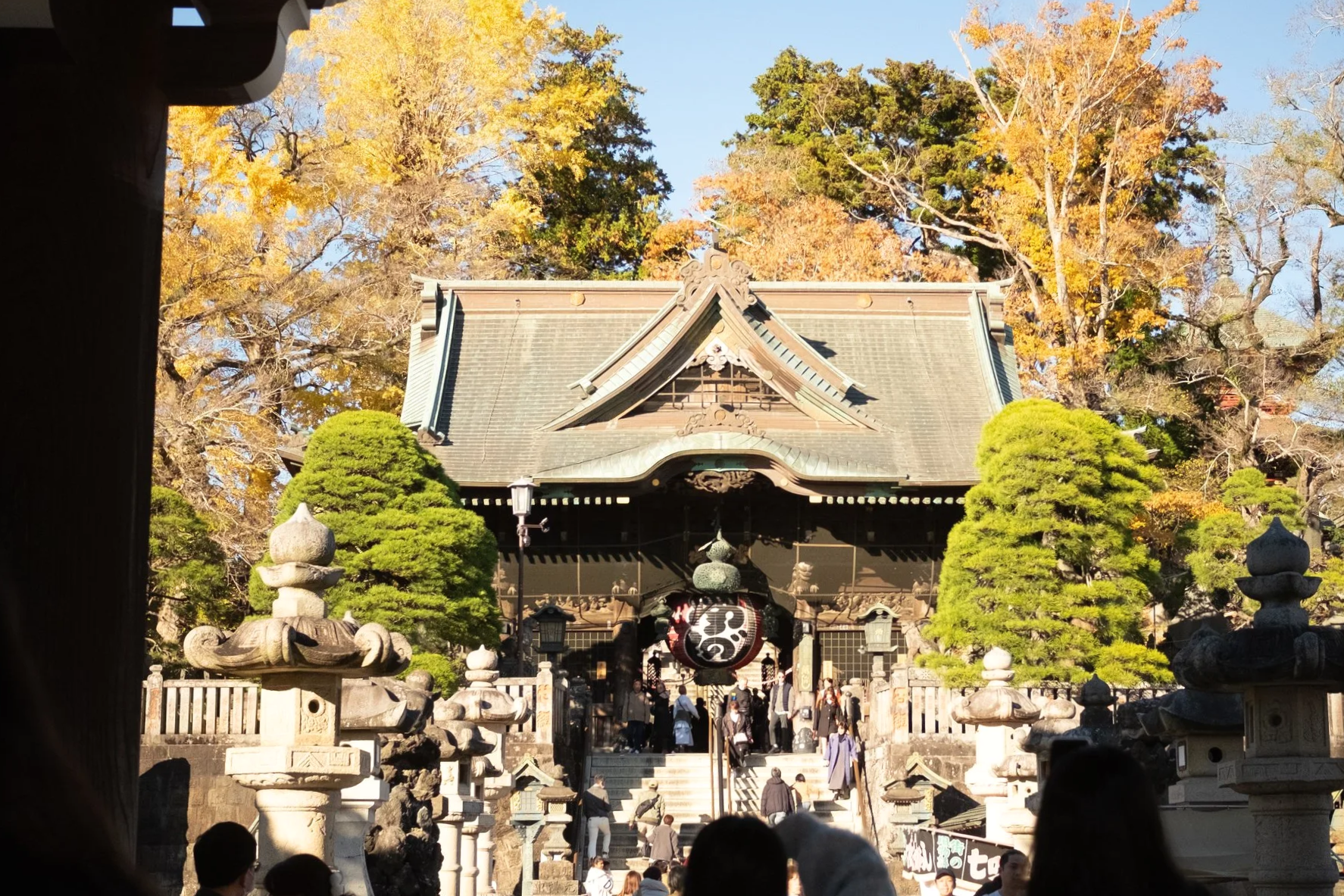
How can I keep that feeling of protection and connection going, even when i can’t make it back t the shrine?
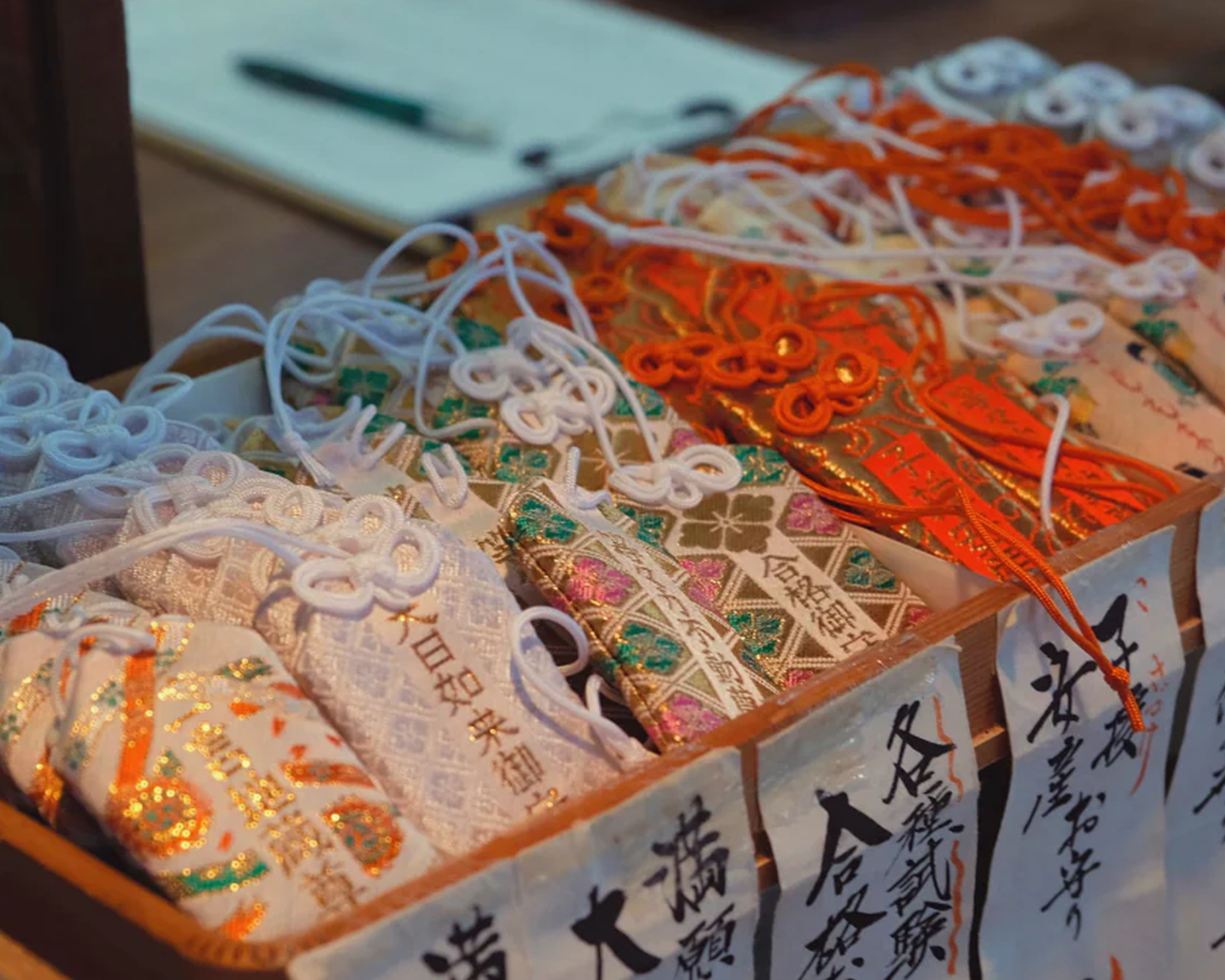
An Omamori (お守り) is a traditional Japanese charm believed to provide a sacred shield of protection and guidance for the person who keeps it nearby.
What is an Omamori?
Their protective power, known as shindoku, gradually weakens, and the charm is believed to absorb negative energy on your behalf throughout that time.
Why does it expire?
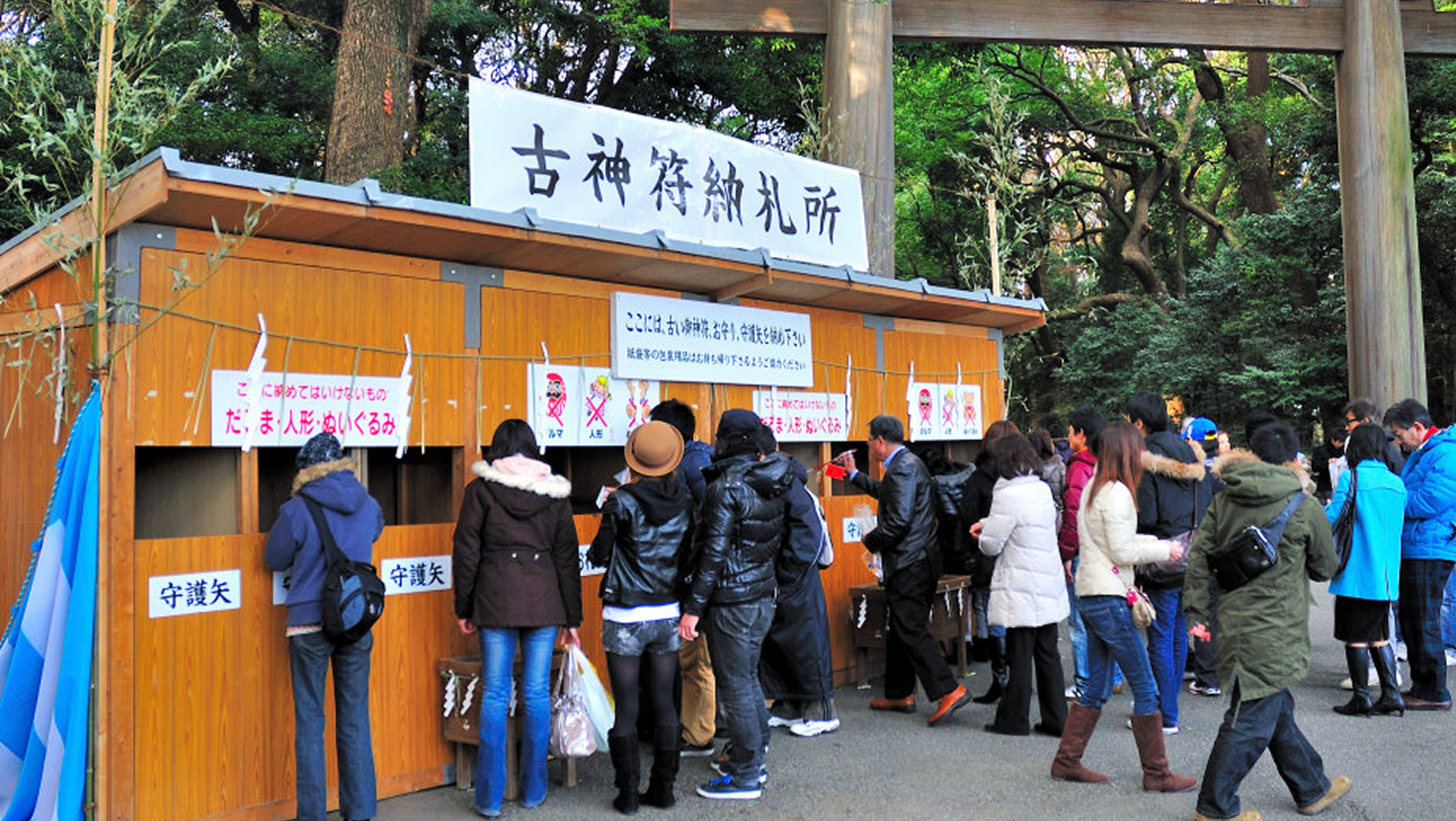
tradition requires us to renew these charms every year, but modern life is rarely that predictable or convenient.
Older Adults (60+) – 45% regularly use or carry Omamori or engage in similar rituals
Middle-Aged Adults (40–59) – 30% occasional use or passive familiarity
Young Adults (20–39) – 15% limited use, mostly during shrine visits or as souvenirs
omamori use by generation
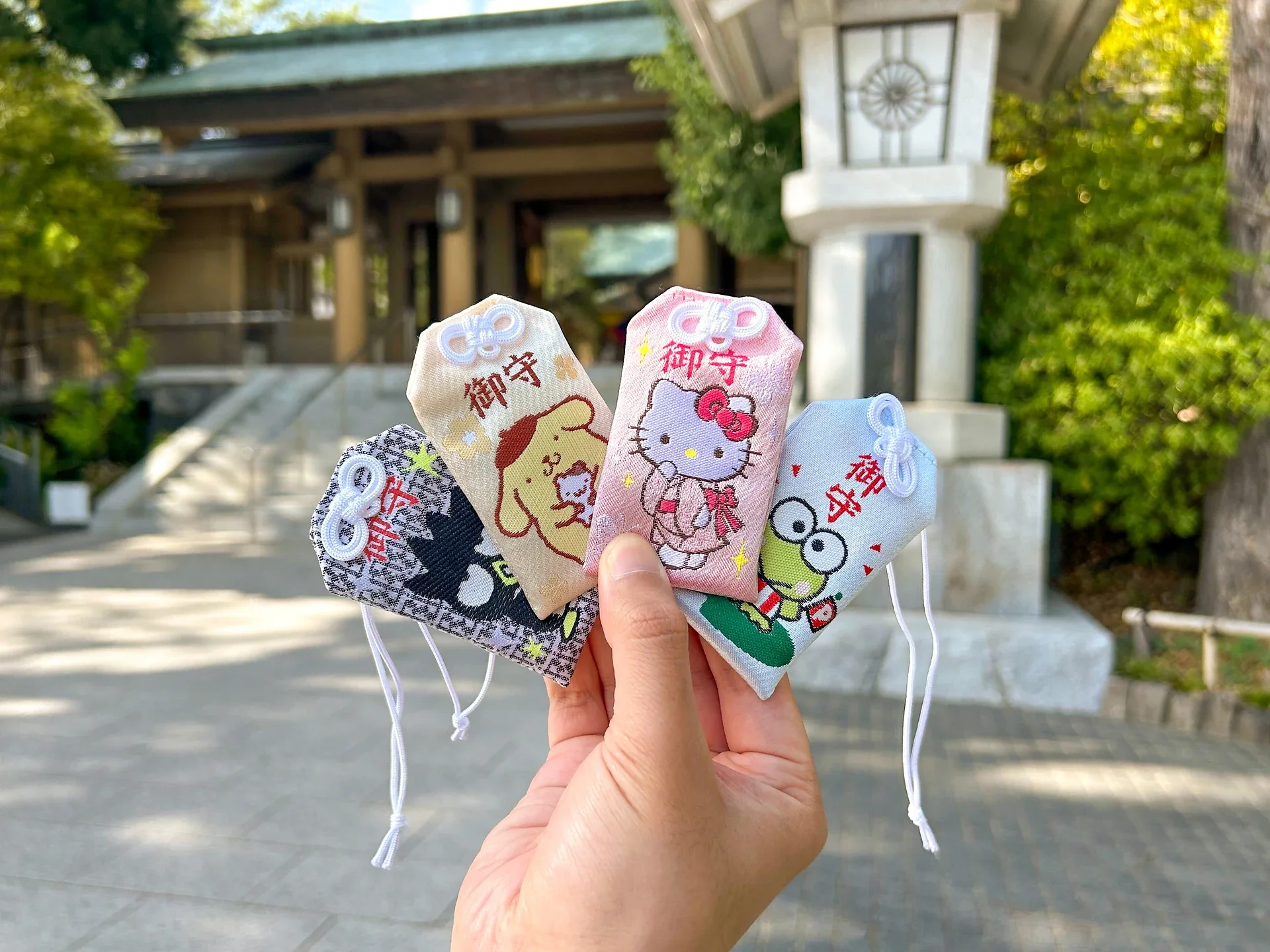
buying charms for their aesthetic appeal, popularity on social media, or as a fun, trendy power spot activity, rather than for strict spiritual practice.
Teens & genz (>20) - 10%
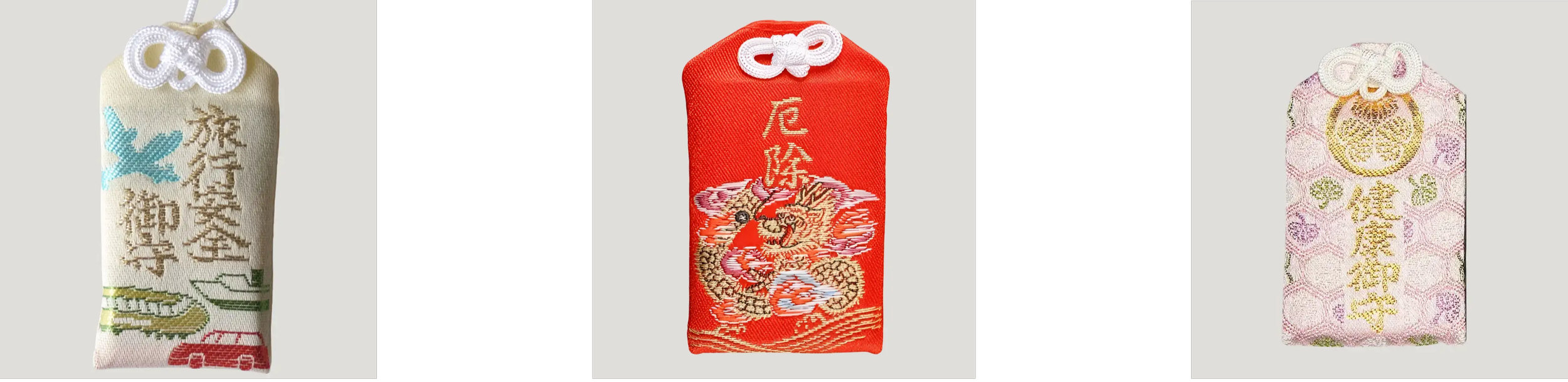
Staying safe, staying strong, and staying healthy
chosen omamoris
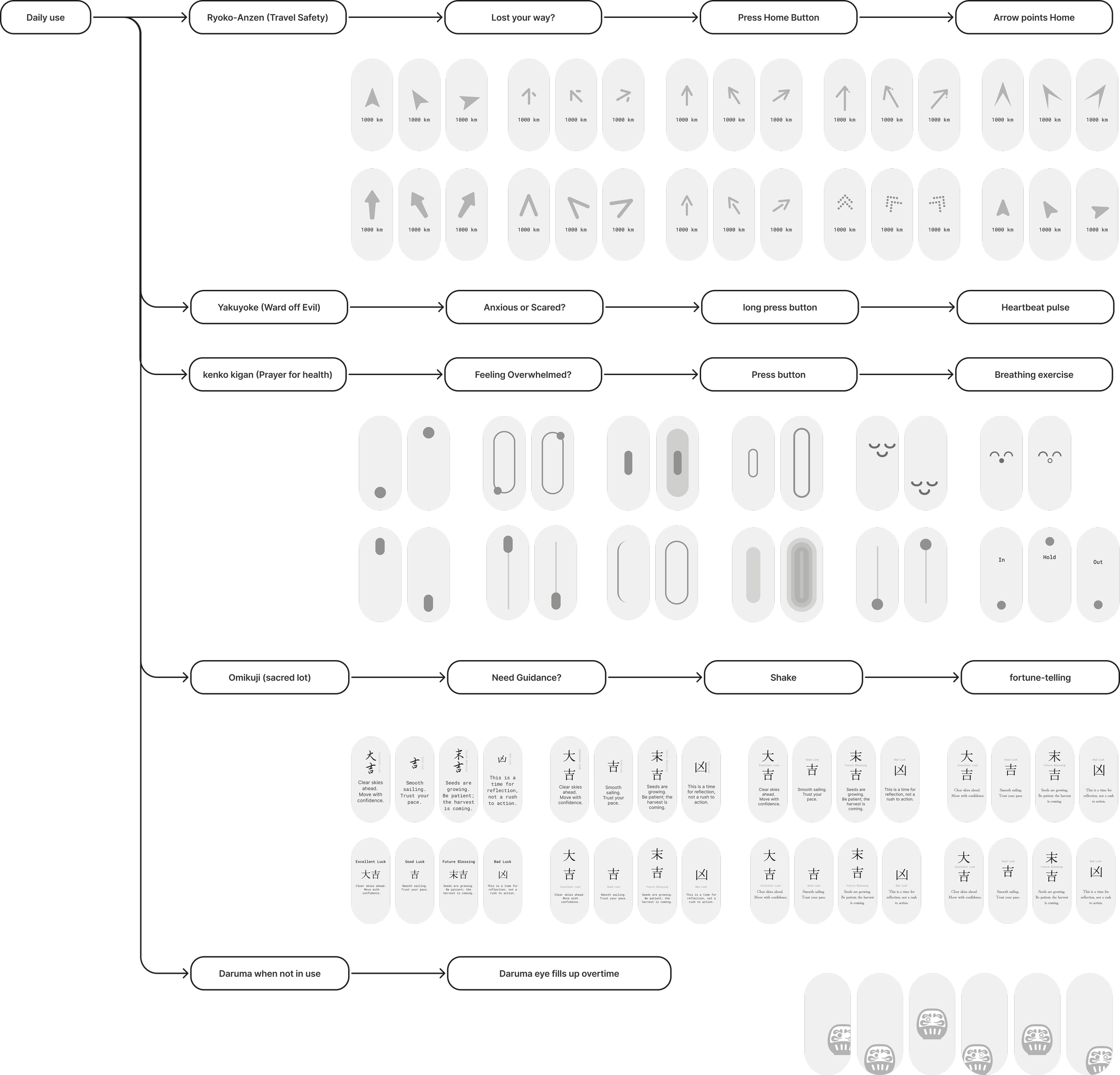
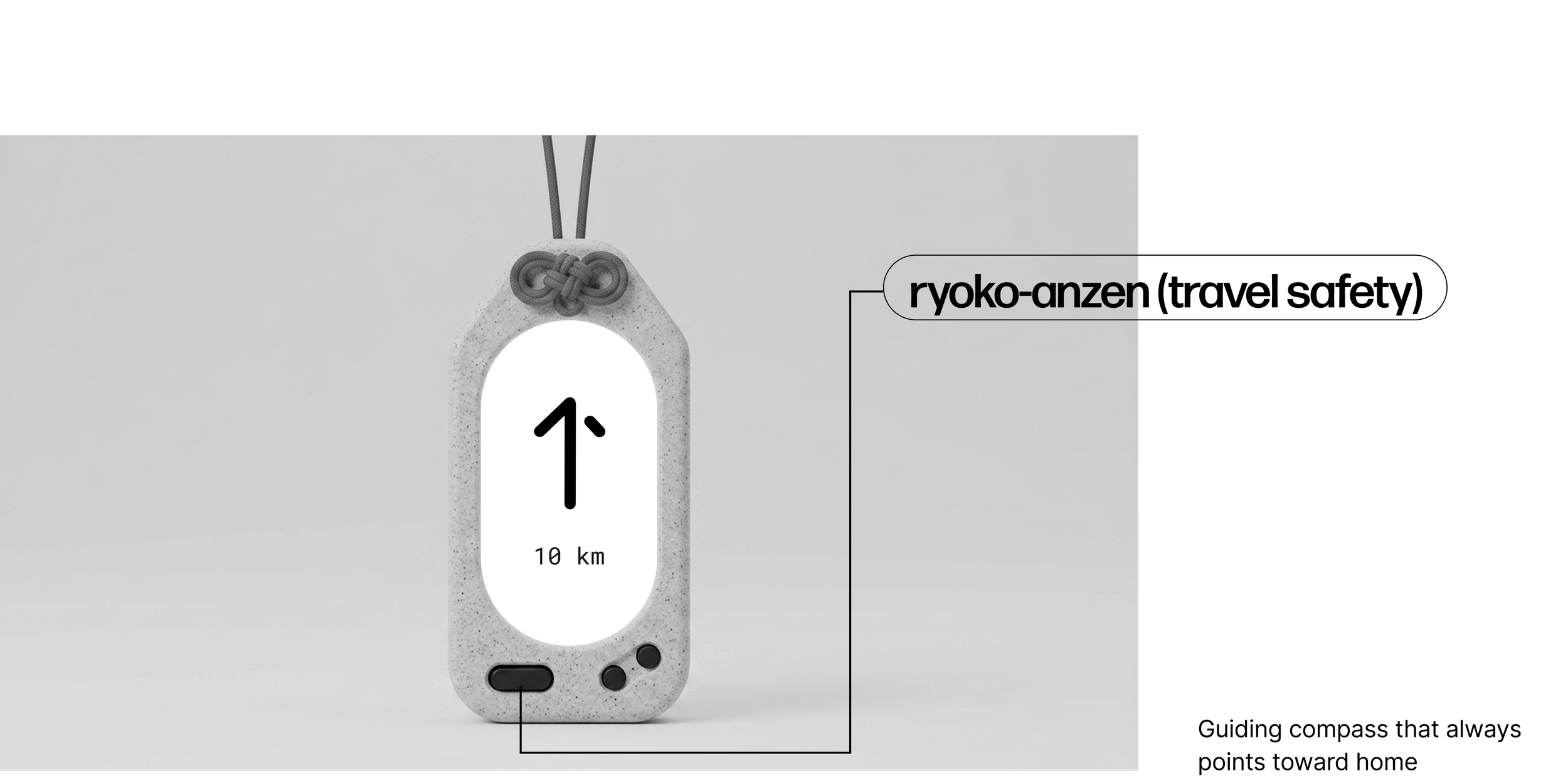
ryoko-anzen ( travel safety )
safe travels
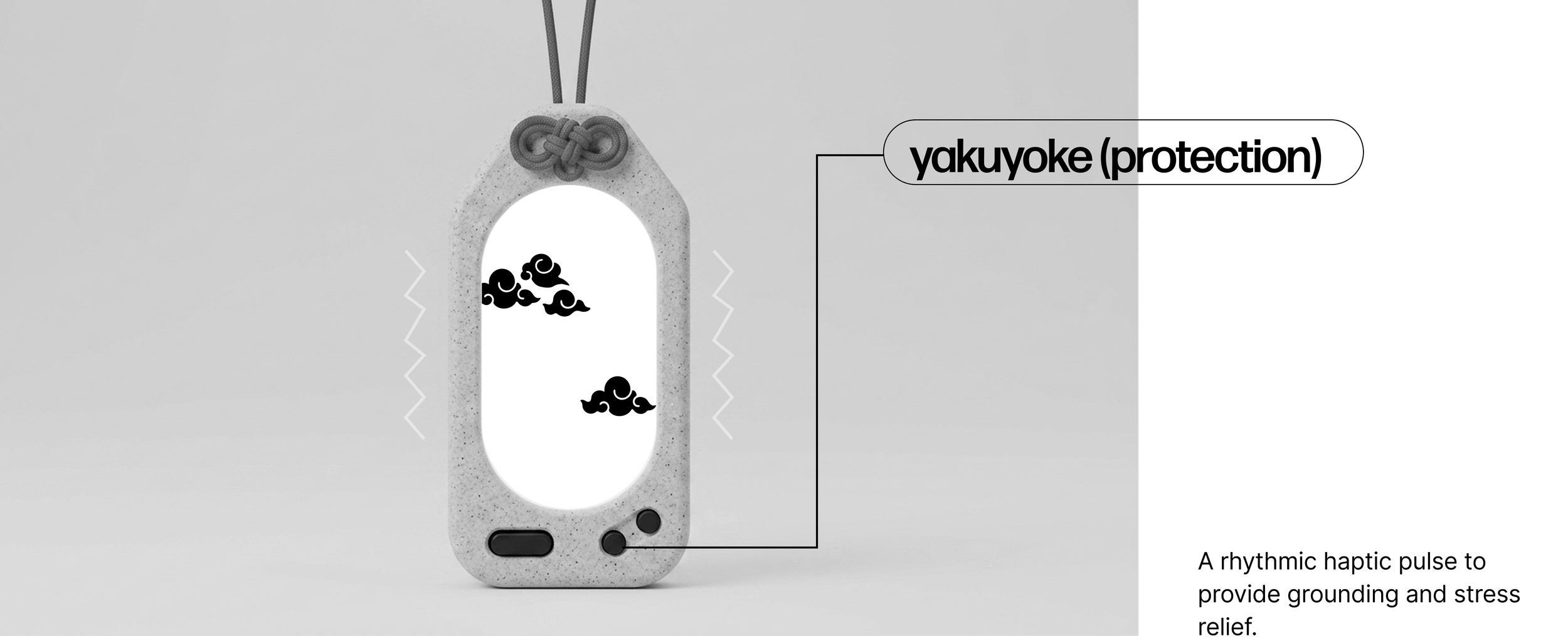
yakuyoke ( Ward off evil )
protection from bad luck or bad vibes
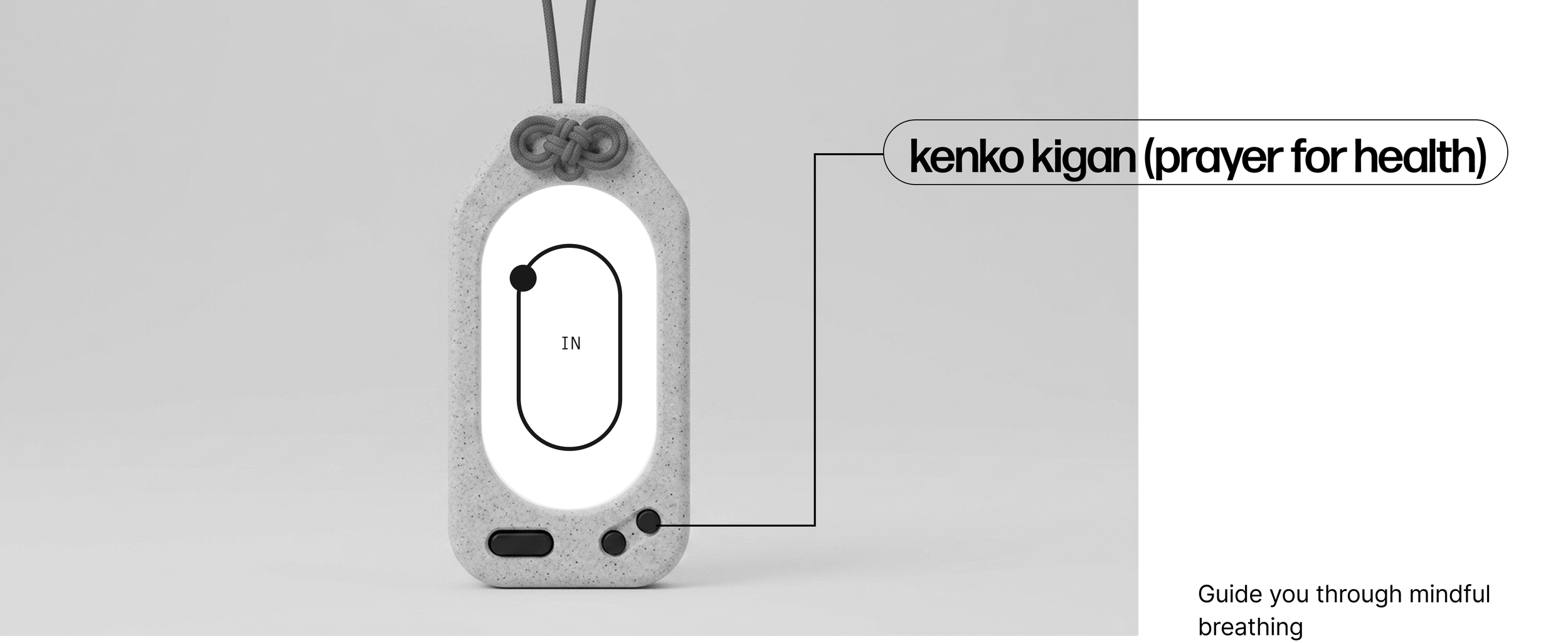
kenko kigan (prayer for health)
good health for your body and mind
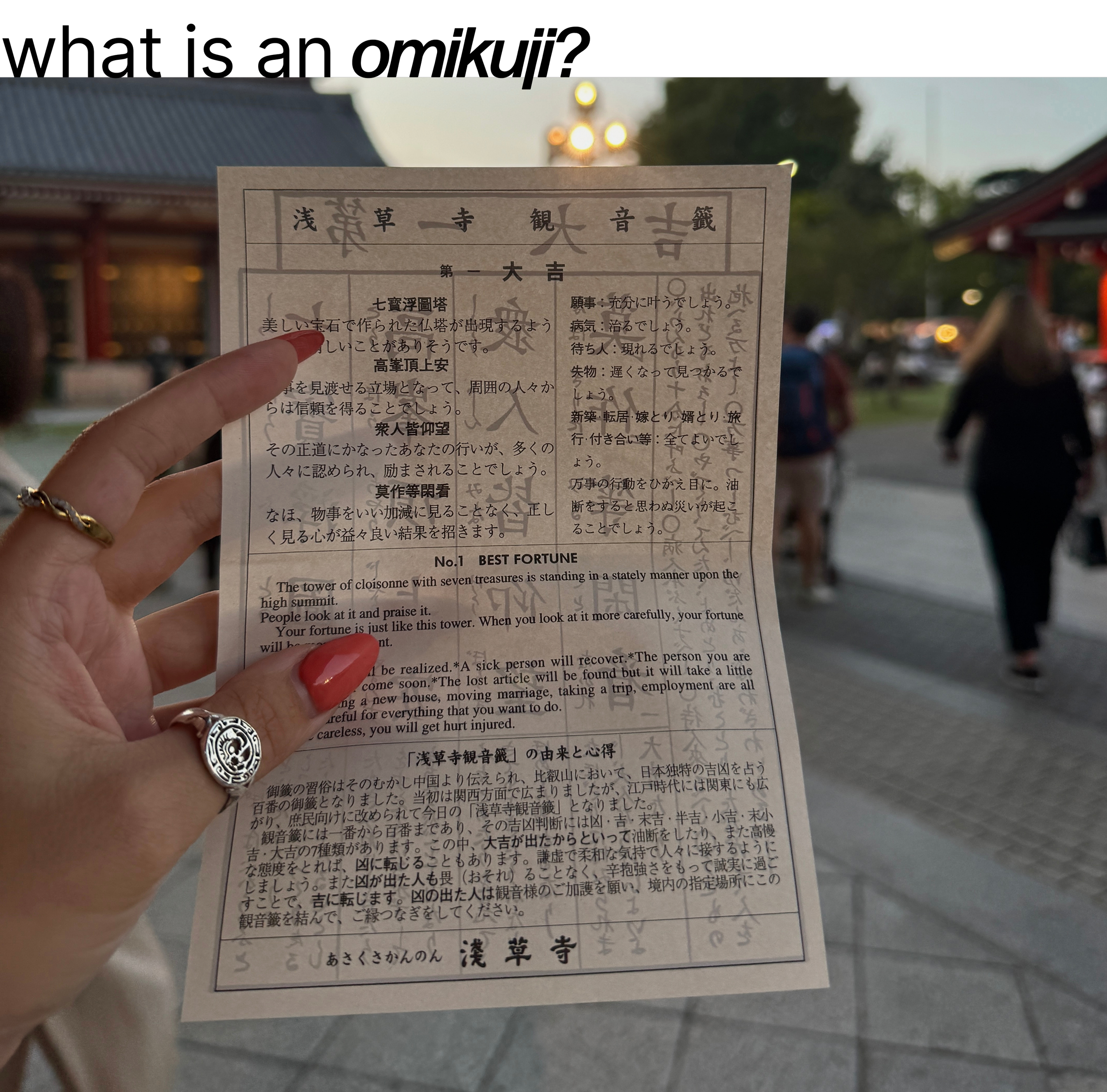
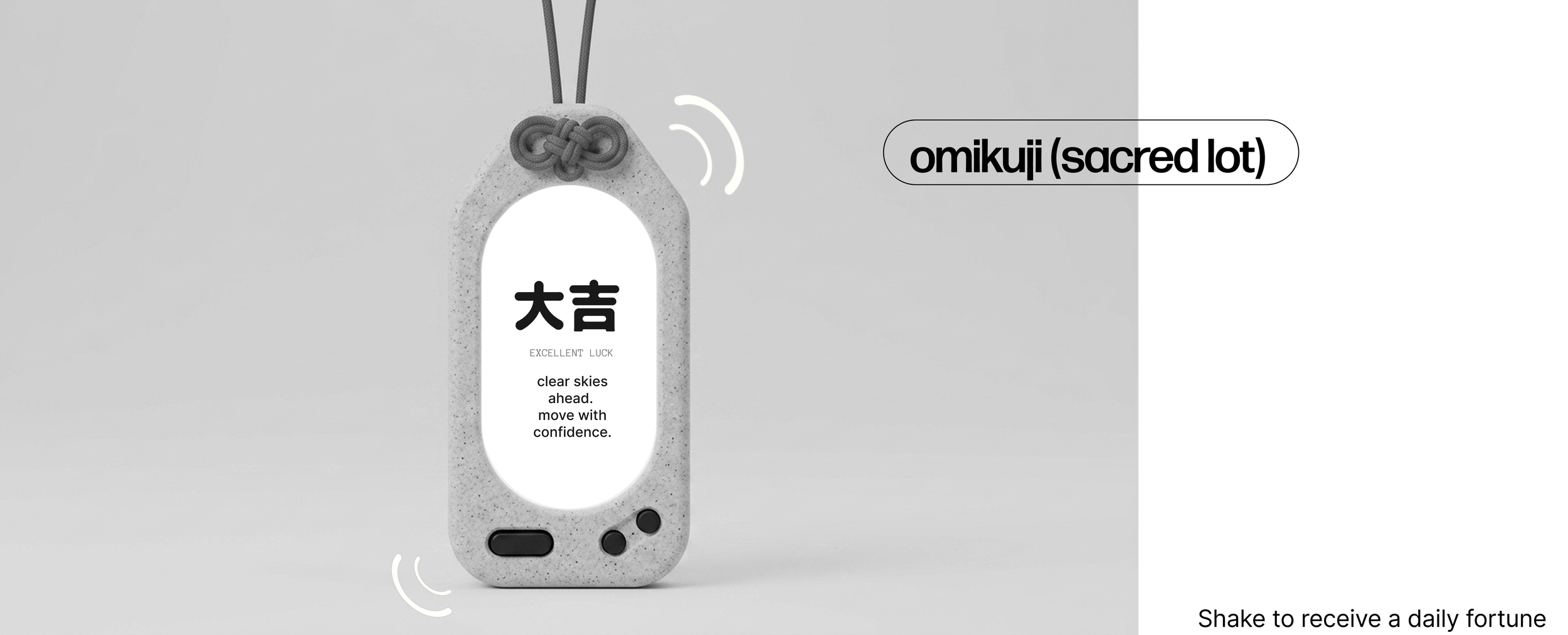
What is an Omikuji?
An omikuji is a traditional Japanese fortune-telling paper found at Shinto shrines and Buddhist temples, usually obtained by making a small offering and shaking a wooden box to receive a random number.
These slips provide a general luck rating, ranging from great blessing to curse, along with specific advice on aspects of your life like health, romance, and travel.
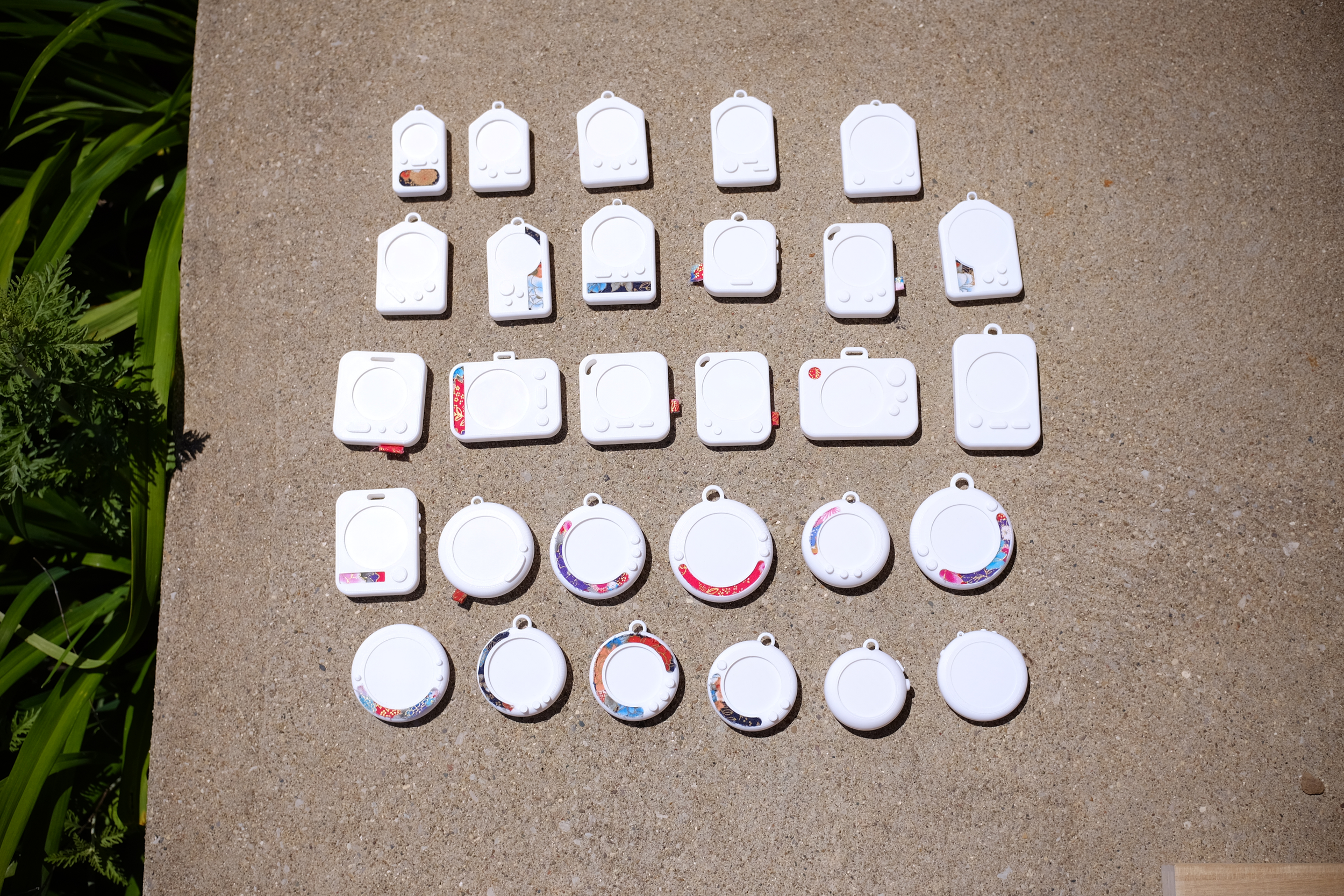
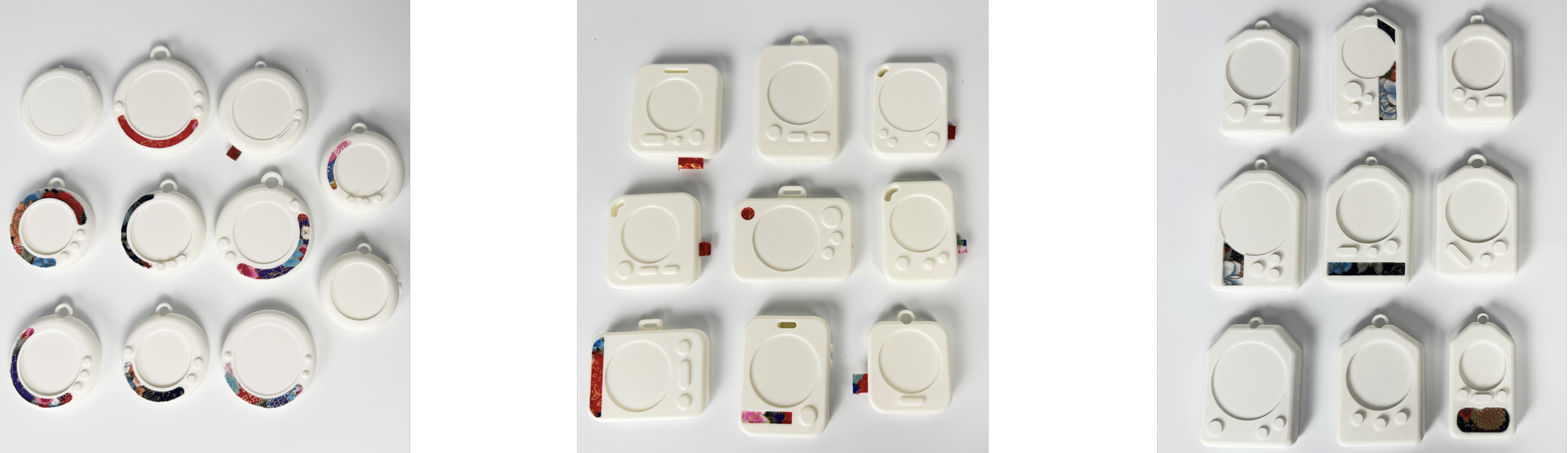
3 concepts
This circular design is inspired by the Enso, a sacred circle in Japanese calligraphy. It is intended to symbolize the self, a state of mind, and a cycle of safe return.
concept 1 : zen circle (the enso)
concept 2 : the console
This rectangular design features a more modern, tech-forward aesthetic. Its form is intended to be similar to a handheld game console.
This design directly mimics the shape of an Omamori. The goal of this form is to establish an immediate cultural connection for the user.
concept 3 : modern omamori
20 participants interacted with 1:1 scale 3D printed models of all 3 concepts
60% - concept 3 : modern omamori
Participants felt the Omamori shape felt different in a market saturated with generic tech
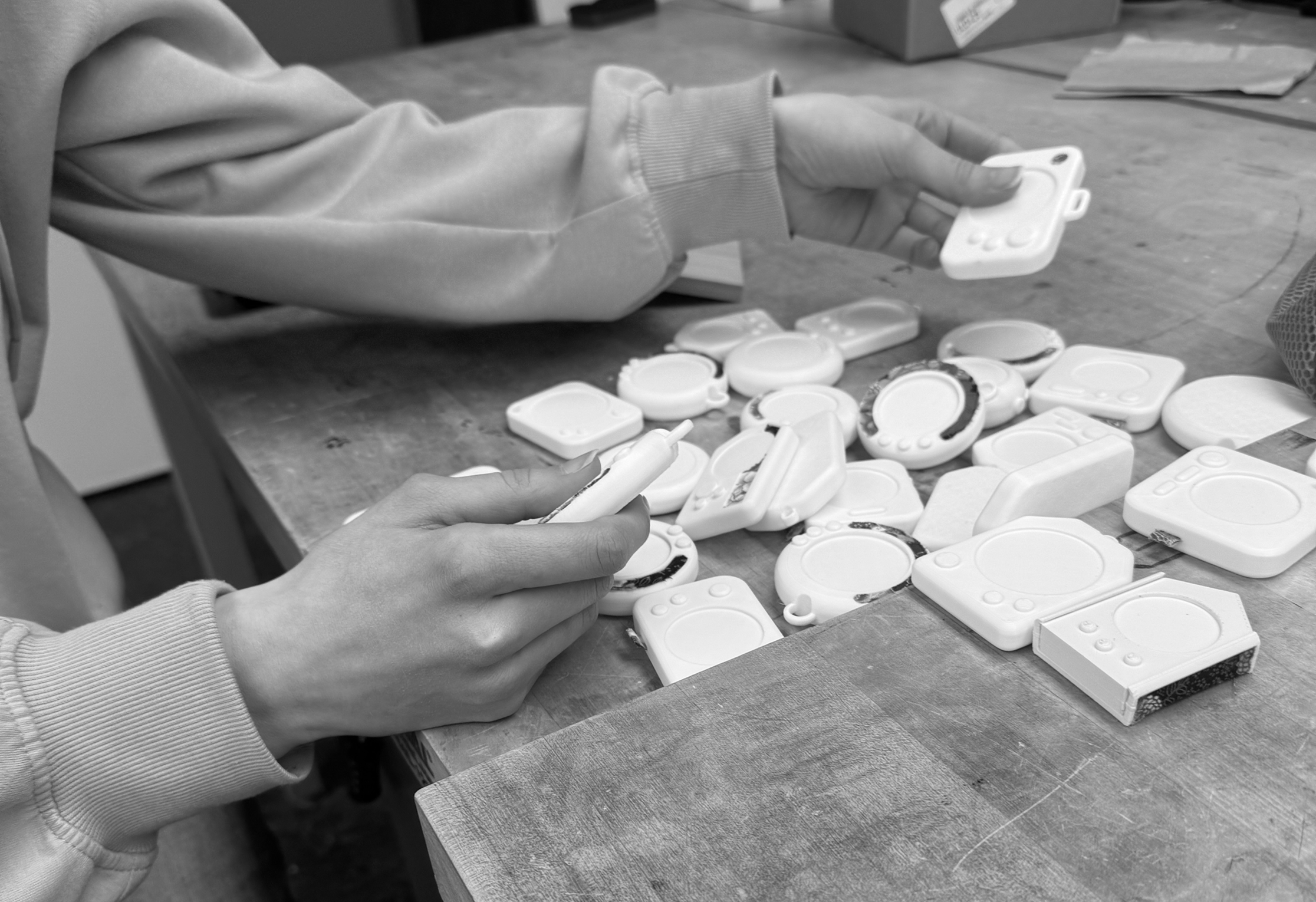
Users stated that the circle and console shapes "overdone"
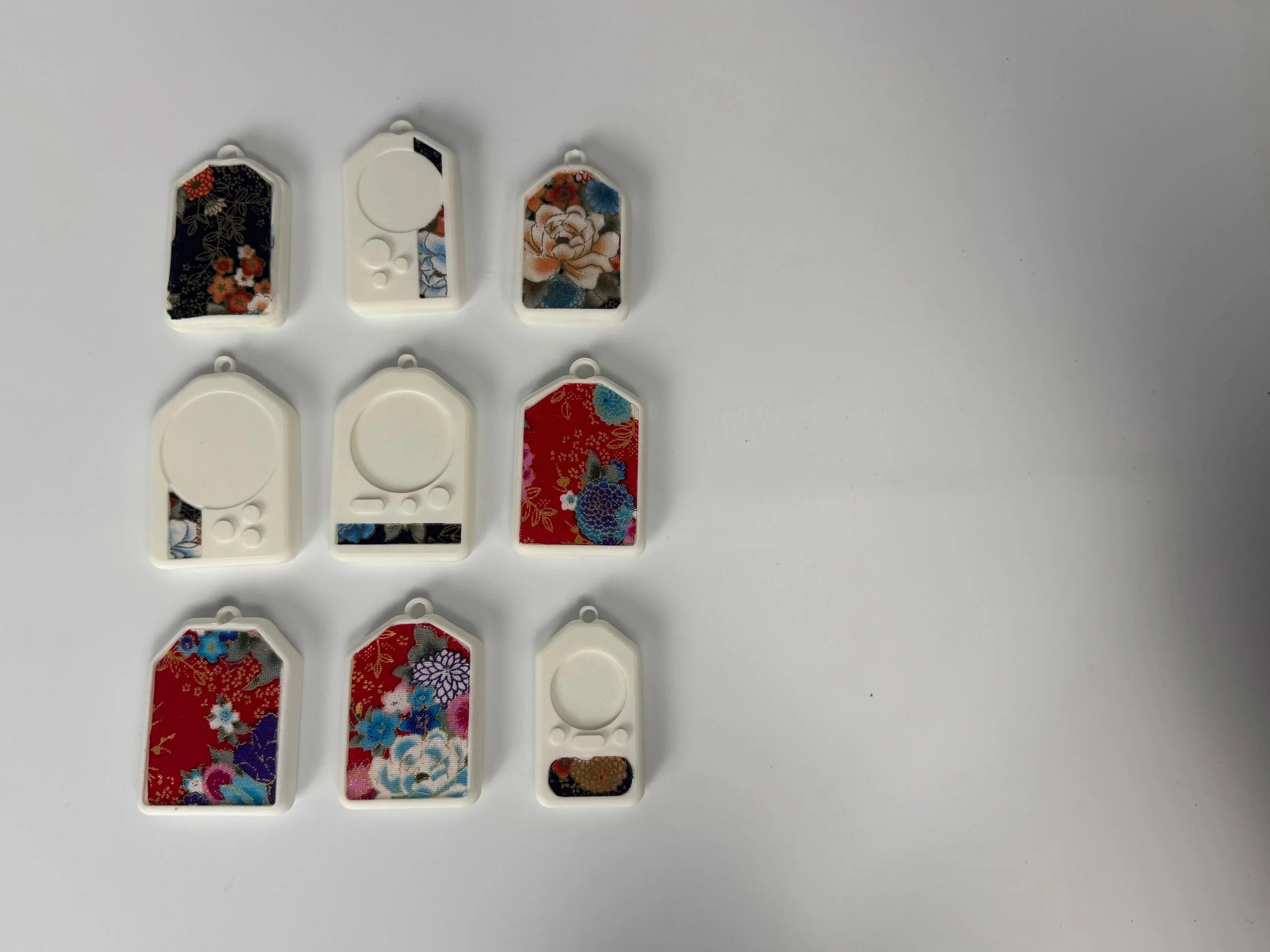
occupies its own space
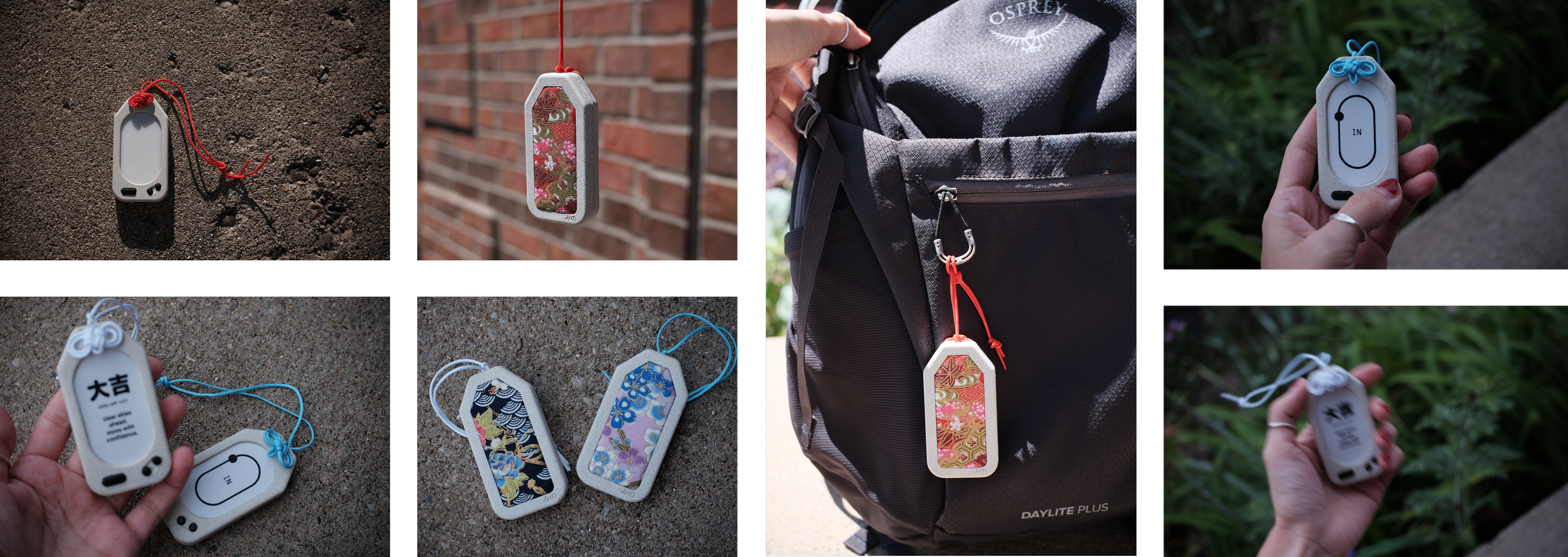
The Omamori shape carries the weight of intention. It immediately signals protection and home to the user, even before they turn the screen on.

different screen applications
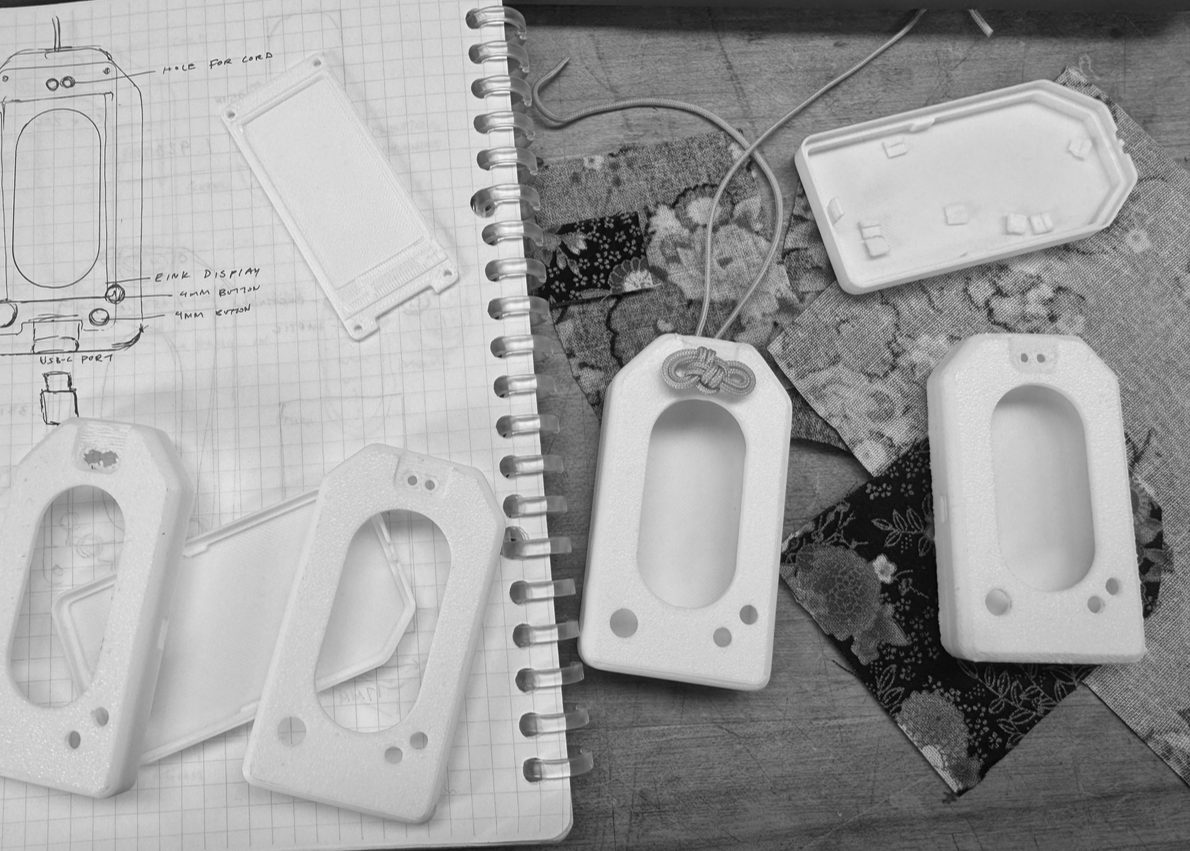
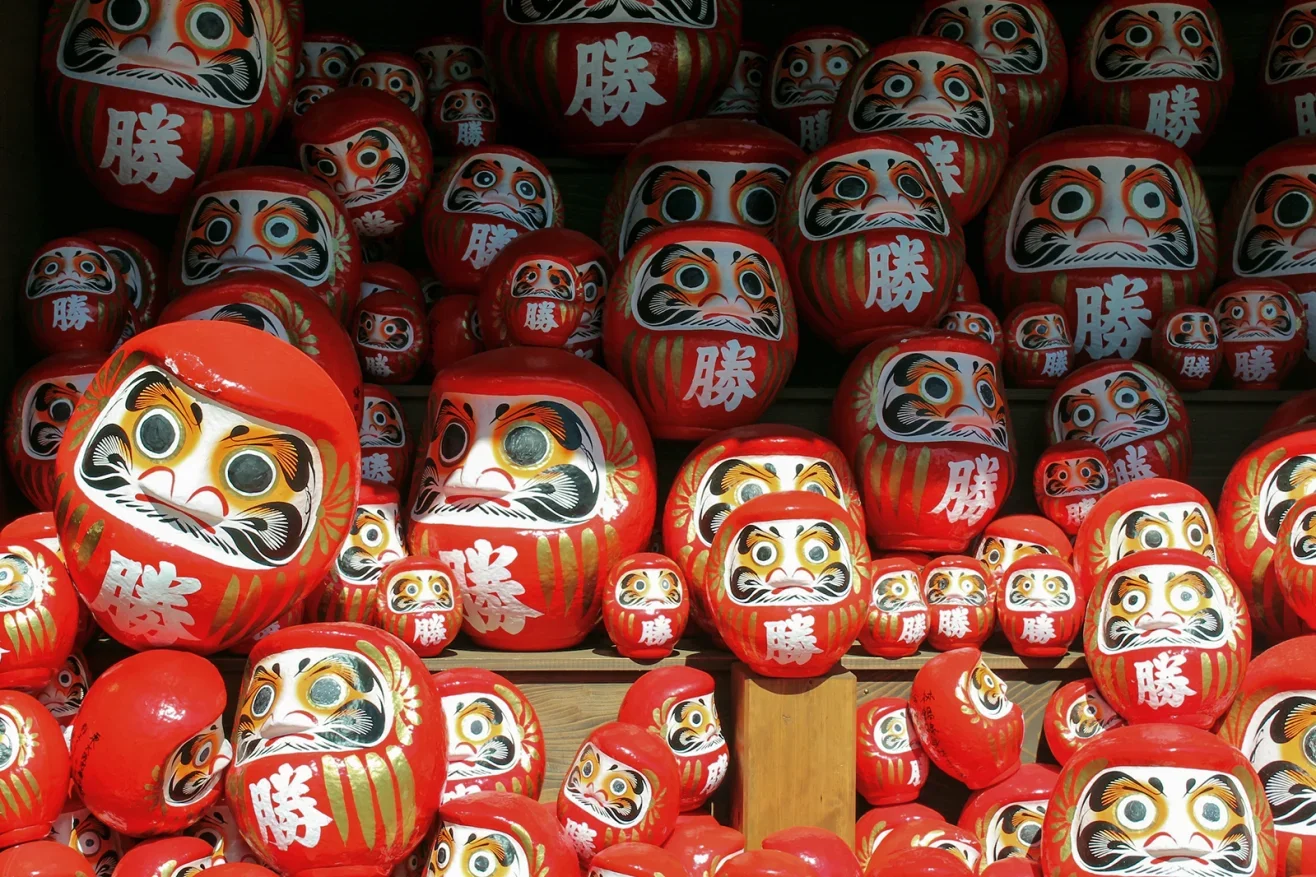
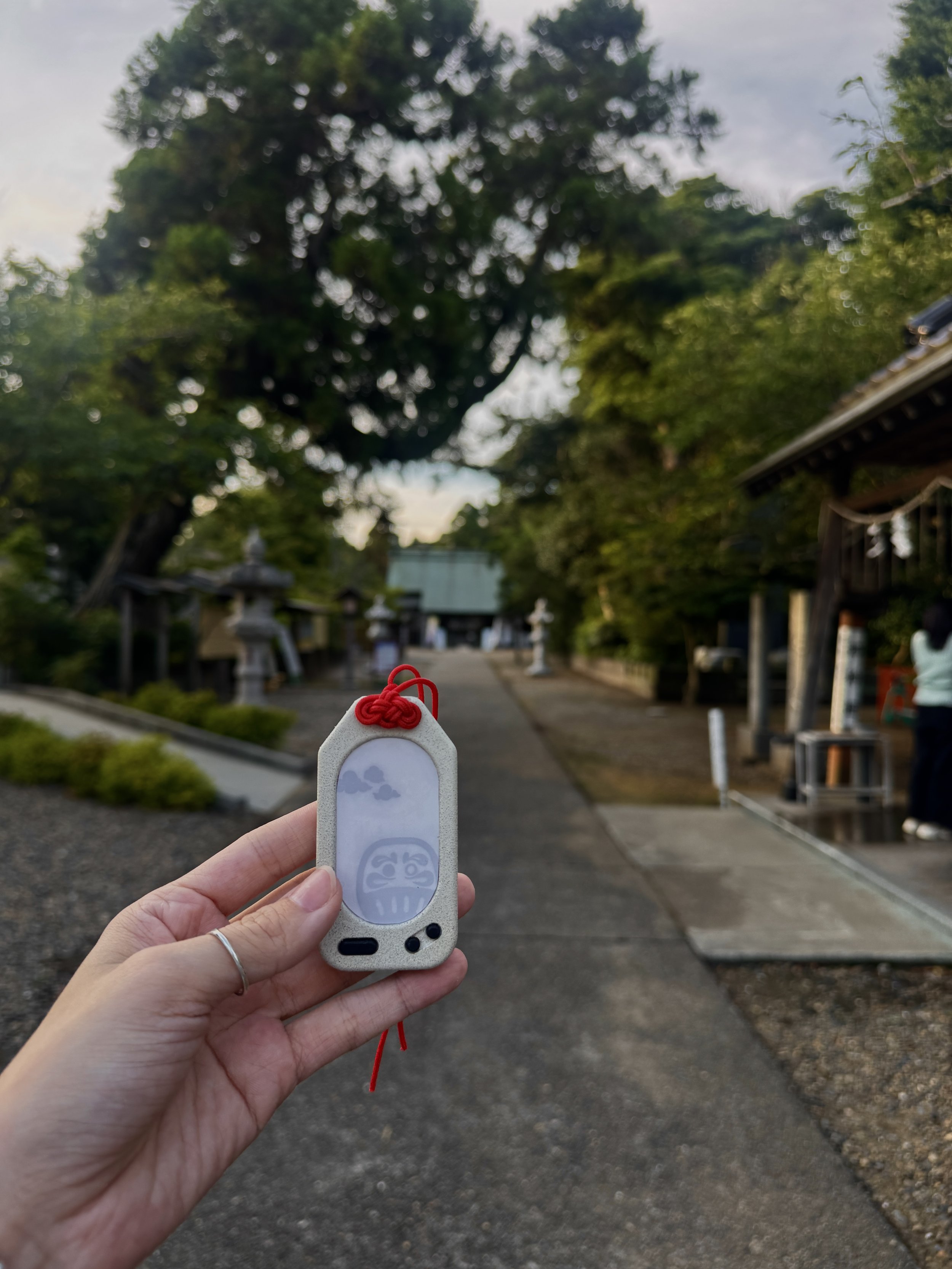
What is a daruma?
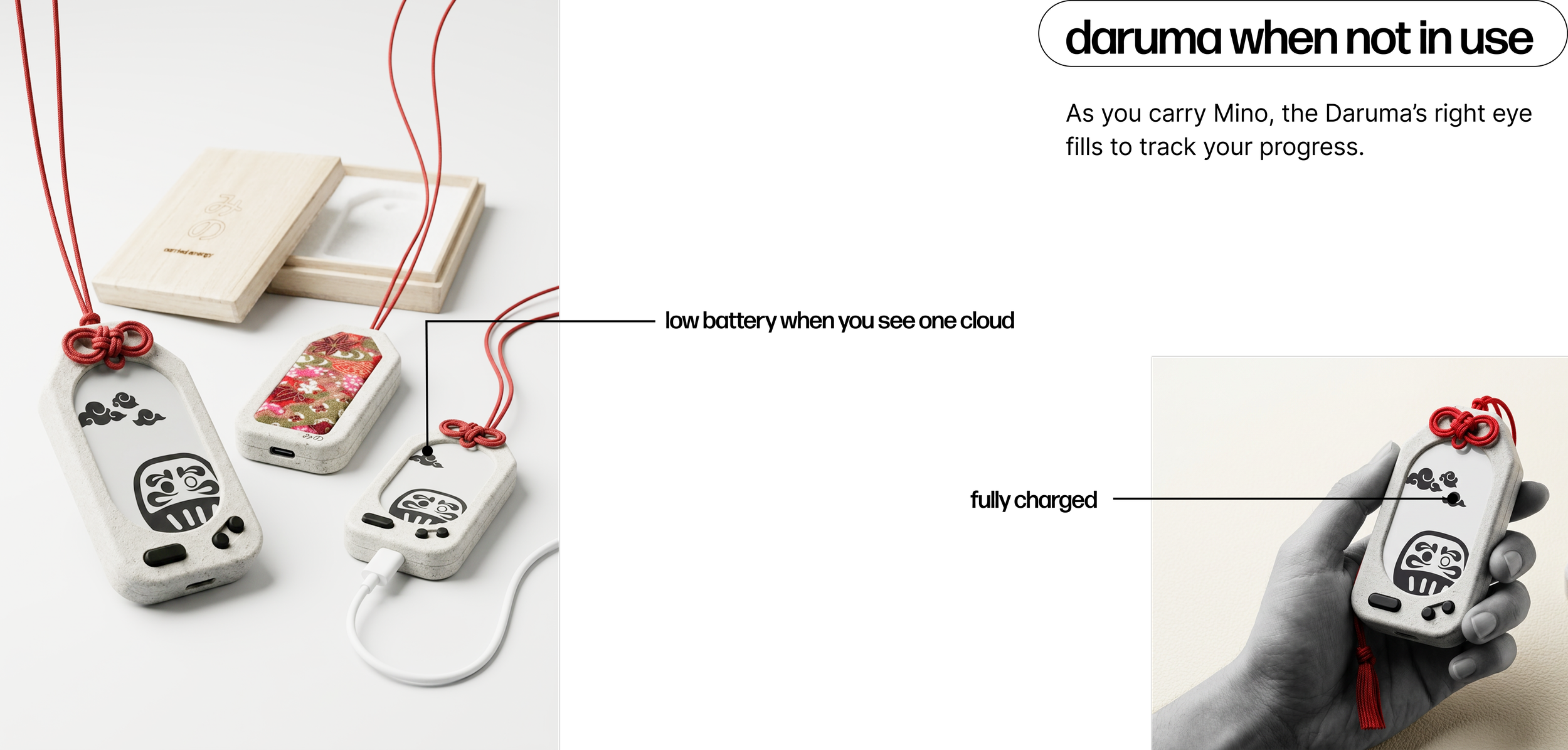
A Daruma is a traditional Japanese wishing doll used to track a personal goal
When setting a goal, you paint one eye of the doll, and only upon achieving that goal do you paint the second.
why mino?
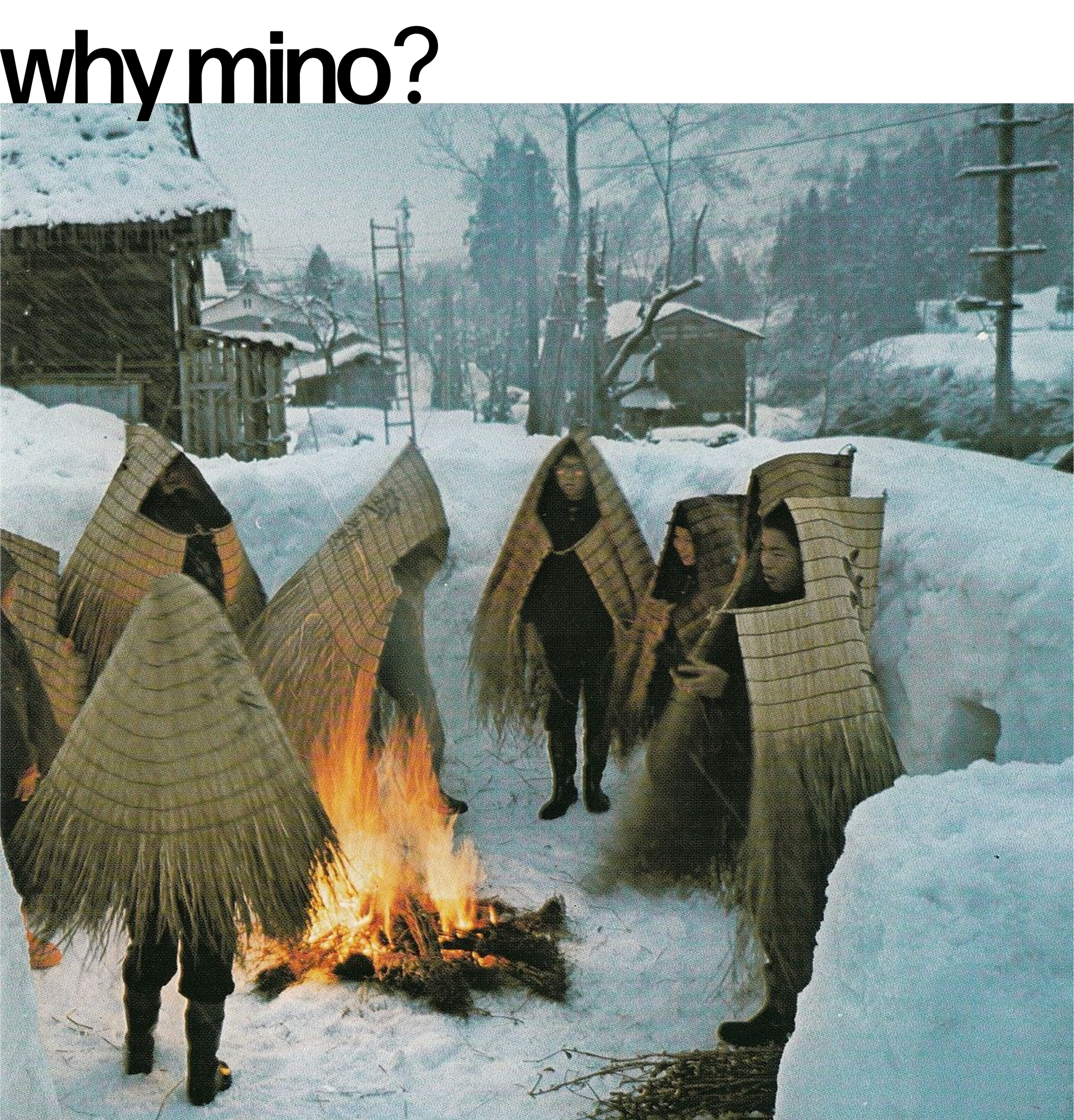
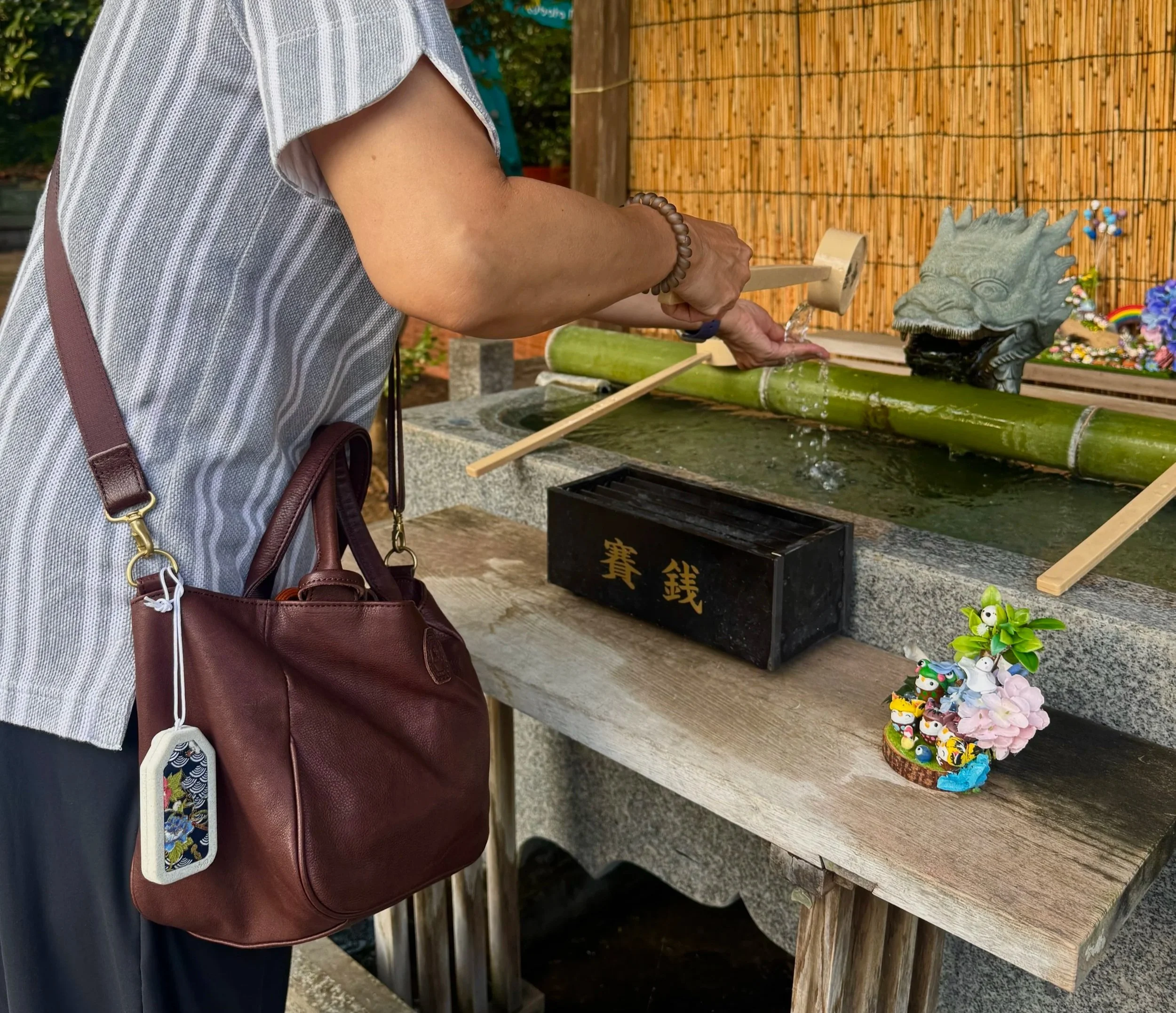
In Japanese culture, a Mino is traditionally a straw raincoat worn by travelers for protection against the elements.
protection, weaving, and the traveler’s journey
